

On this page
What is a GTIN number?
A GTIN number is the unique number that identifies one trade item, such as a 500 ml bottle of a particular shampoo, wherever in the world it is sold. When a checkout scanner beeps, it reads the GTIN and the shop's system looks up the price and stock record stored against it.
The barcode is not the GTIN, though. The bars are just a way of printing the number so a machine can read it. The same GTIN can be printed as different barcode types, typed into a marketplace listing or stored in a spreadsheet, and it stays the same product number every time.
GTIN meaning and full form: Global Trade Item Number
The full form of GTIN is Global Trade Item Number. The standard belongs to GS1, the non-profit that runs the retail barcode system. A GTIN starts with a company prefix that GS1 licenses to a brand owner. The brand then fills in the remaining digits for each of its products, and the last digit is always a check digit calculated from the others. If you want the background on GS1 itself and its company prefix, read what a GS1 barcode is.
GTIN example: how the digits break down
Here is a made-up GTIN-13. It starts with 20, a GS1 range kept for in-store use and never licensed to any company, so it is safe to use as a demonstration.
How the GTIN-13 2012345678903 is built
The split between company and item digits is not fixed. A company that licenses a longer prefix gets fewer item digits, which means fewer numbers to hand out.
Which GTIN lengths exist and which barcode prints each
GTINs come in four lengths. The length mostly depends on where the product is sold and what is being labelled: a single item or a carton.
| GTIN | Digits | Usual barcode | Where you see it |
|---|---|---|---|
| GTIN-8 | 8 | EAN-8 | Very small packs with no room for a full barcode |
| GTIN-12 | 12 | UPC-A | Retail products in the US and Canada |
| GTIN-13 | 13 | EAN-13 | Retail products in most other countries, and books (an ISBN is a GTIN-13) |
| GTIN-14 | 14 | ITF-14 | Outer cases and cartons in the warehouse, not the checkout |
What is a GTIN-12?
A GTIN-12 is the 12-digit number printed as a UPC-A barcode: 11 digits plus a check digit. It is the number on almost every product sold in North American stores. You can write the same GTIN-12 as 13 digits by putting a zero in front, which is why European scanners read UPC codes without trouble.
Why some systems pad every GTIN to 14 digits
Databases and product feeds often store every GTIN as 14 digits by adding zeros at the front. 036000291452 and 00036000291452 are the same GTIN. If a form rejects your number, check whether it expects the padded form.
GTIN vs UPC and EAN: is it the same number?
Mostly yes. GTIN is the umbrella name for the number. UPC and EAN are names for the barcode types that print it, and people also use them loosely for the number itself.
GTIN vs UPC
A UPC is a GTIN-12 printed as a UPC-A barcode. Every UPC is a GTIN, but not every GTIN is a UPC. When a US marketplace asks for a "UPC", a 12-digit GTIN is what it wants.
GTIN vs EAN
An EAN, now officially the GS1 barcode family EAN/UPC, usually means a GTIN-13 printed as an EAN-13 barcode, or a GTIN-8 printed as EAN-8. A field labelled "EAN" on a European site accepts the same number a field labelled "GTIN" does.
Is a GTIN barcode different from the GTIN?
Yes. The GTIN is the number, and a GTIN barcode is that number drawn as bars. Change the barcode type, the colours or the size and the product is still identified by the same GTIN. Only change the digits and you have a different product.
Code 128 is not a GTIN. A Code 128 or Code 39 label can hold any text, such as an internal SKU. That works for your own stockroom, but it is not a GTIN and retail checkouts will not recognise it as a product.
Where to find a GTIN number on a product
Look for the barcode on the back or base of the pack. The digits printed under the bars are the GTIN:
- 12 digits, often with a small digit on each side of the bars: a GTIN-12 (UPC-A).
- 13 digits, with the first digit outside the bars on the left: a GTIN-13 (EAN-13).
- 8 digits on a tiny pack: a GTIN-8.
- 14 digits in a thick black frame on a shipping carton: a GTIN-14 (ITF-14).
If the digits are worn or cut off, scan the barcode instead. The online barcode scanner reads EAN, UPC and ITF-14 codes from your camera or a photo and shows the number. It returns the digits, not a product name.
For your own products, the GTIN lives in the account where you licensed it, such as your GS1 member portal. Write it into your product spreadsheet alongside the SKU so you never have to read it off a box again.
How do a product, a variant and a case get their GTINs?
The rule of thumb from GS1: if a shopper or a shop needs to tell two items apart, they need different GTINs.
One product
A single sellable item gets one GTIN, which stays the same for as long as that item is unchanged, whoever sells it and in whatever country.
Does a new size, colour or flavour need a new GTIN?
Yes. A T-shirt in small, medium and large is three GTINs, and in two colours it is six. The same goes for a new flavour, a different net weight or a new multipack. A small artwork refresh with the same contents usually keeps the old number. GS1 publishes detailed GTIN management rules for the grey areas.
How a case of 12 gets its own GTIN
A carton of 12 bottles is a different trade item from one bottle, so it gets its own number, often a GTIN-14. The usual way to build one is to put an indicator digit from 1 to 8 in front of the item's first 12 digits and work out a new check digit. Using the example above, a case of 2012345678903 could become 1 201234567890 0, printed as an ITF-14 barcode on the outer box.
Never reuse a GTIN for a different product. If two items share a number, stock counts, prices and marketplace listings get merged, and fixing that later is painful.
Why do marketplaces ask for a GTIN?
Marketplaces and shopping feeds use the GTIN to match your listing with the same product sold elsewhere, to merge reviews and to catch counterfeit or duplicate listings. That is why Amazon asks for a UPC, EAN or ISBN when you create a listing, and why Google Merchant Center asks for a GTIN on any product that has one from its manufacturer.
A few things small sellers should know:
- Reselling a branded product: use the GTIN already on the pack. Do not make a new one.
- Selling your own product: license GTINs from GS1 in your country, or the number may not match your brand in marketplace checks.
- Handmade or one-off items: some marketplaces offer an exemption for products with no GTIN. Check each platform's rules before you apply.
- Bought numbers: cheap UPCs sold by resellers may be registered to another company, and some marketplaces reject them.
Can you make a GTIN barcode for free?
You can print one for free once you have the number. Getting the GTIN itself means licensing it from GS1. A barcode generator draws bars for whatever digits you type, so it cannot issue a valid GTIN for you.
The QRabbit barcode generators do the drawing part. Pick the format that matches your GTIN length, then type the digits without the check digit (12 for EAN-13, 11 for UPC-A, 7 for EAN-8 or 13 for ITF-14). The check digit is added for you. You can turn the number under the bars on or off, set colours and bar width, and download the barcode as PNG, JPG or SVG. SVG stays sharp at any size for packaging artwork.
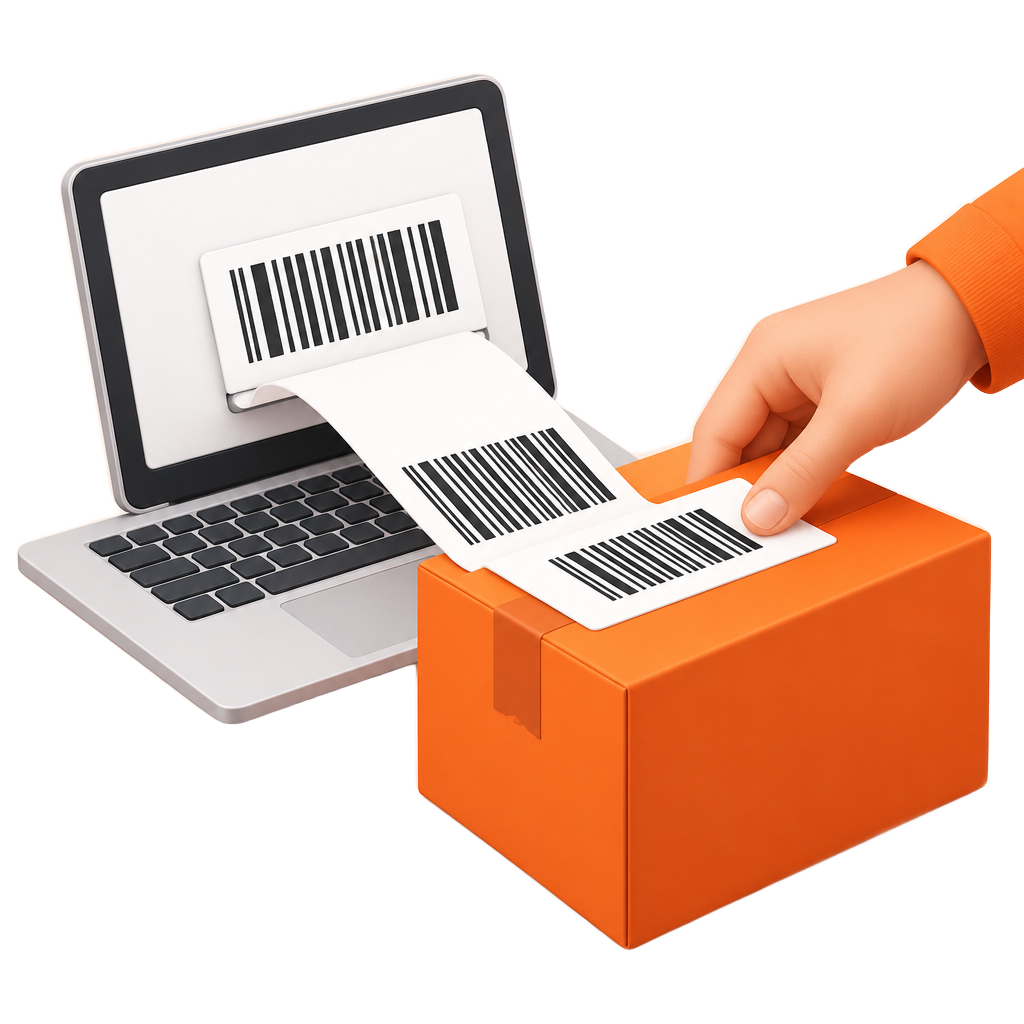
Got your GTIN? Turn it into a print-ready barcode
Type the first 12 digits of your GTIN-13. The check digit is added for you, and you can download the barcode as PNG, JPG or SVG. UPC-A, EAN-8 and ITF-14 are one click away.
Frequently asked questions
GTIN stands for Global Trade Item Number. It is the GS1 standard number that identifies one specific product, in one size and pack, anywhere it is sold. It comes in 8, 12, 13 or 14 digits and ends with a check digit calculated from the other digits, so scanners can catch a misread.
The GTIN is the row of digits printed under the barcode on the pack, usually on the back or base. Retail items carry 8, 12 or 13 digits. Shipping cartons often carry 14 digits in a framed ITF-14 barcode. If the digits are unreadable, scan the barcode and a scanner will show the number.
A UPC is a 12-digit GTIN and an EAN is usually a 13-digit GTIN, so both are GTINs. GTIN is the general name for the number. UPC and EAN are names for the barcode types that print it, and people use them for the number too. A field asking for any of them accepts the same digits.
Yes. Any variant a shopper or retailer needs to tell apart, such as a different size, colour, flavour or pack quantity, needs its own GTIN. A shirt in three sizes and two colours uses six numbers. A case of several units also gets its own GTIN, separate from the single item inside it.
Many large marketplaces and shopping feeds ask for one, especially for branded products, because they use it to match listings. If you resell a branded item, use the GTIN on its pack. Handmade and private-label sellers can sometimes apply for an exemption, but the rules depend on the platform. Your own web shop does not require one.